



Why This Matters:
- Agar dilution remains the reference method for certain antimicrobial susceptibility tests, yet its complexity limits routine clinical implementation.
- A practical, on-demand alternative enables laboratories to perform reference-quality MIC testing without extensive preparation time. ·
- Improved reproducibility and reduced skipped dilutions enhance the reliability of MIC determinations, particularly for drugs such as fosfomycin, where accurate testing is critical.
- The ability to generate testing media rapidly supports faster clinical decision-making and expands the feasibility of reference-level AST in routine laboratory workflows.
Key Findings: This study evaluated a poloxamer 407-based dilution method as an alternative to traditional agar dilution antimicrobial susceptibility testing (AST), using fosfomycin susceptibility testing as a model system.1 Of note, poloxamer 407 is a thermoreversible polymer that remains liquid at low temperatures and solidifies when warmed, enabling rapid, on-demand preparation of testing media. The authors reported:
- Comparable performance to agar dilution: For E. coli, 100% categorical agreement and 87% essential agreement were observed. Agreement across other Enterobacterales remained high, supporting method equivalence.
- No "very major" errors observed: Discrepancies were conservative, with slightly higher MIC values observed using poloxamer dilution, reducing the risk of false susceptibility results.
- Skipped dilutions significantly reduced: Skipped dilutions were reduced by approximately sixfold compared with traditional agar dilution in E. coli testing.
- Proteus swarming suppressed: Swarming behavior, which can interfere with MIC interpretation, was inhibited on poloxamer media.
- Simplified workflow through on-demand preparation: Media can be stored in liquid form at 4 °C and rapidly solidified when needed, eliminating repeated agar melting and temperature management.
- Potential for broader AST applications: The method shows promise for additional antimicrobials requiring agar dilution, though further validation across organisms and drug classes is needed.
Bigger Picture: This study reflects ongoing efforts to modernize antimicrobial susceptibility testing while maintaining reference-method performance. Although agar dilution remains a gold standard, its labor-intensive workflow limits routine use in many laboratories.
Thermoreversible polymers such as poloxamer 407 offer a materials-based solution to workflow bottlenecks, enabling scalable, flexible preparation of susceptibility testing media without compromising analytical rigor. If validated across additional organisms and antimicrobials, this approach could support:
- Expanded reference-method testing capacity
- Faster laboratory turnaround times
- Improved access to reliable MIC testing, particularly for challenging antimicrobial agents.
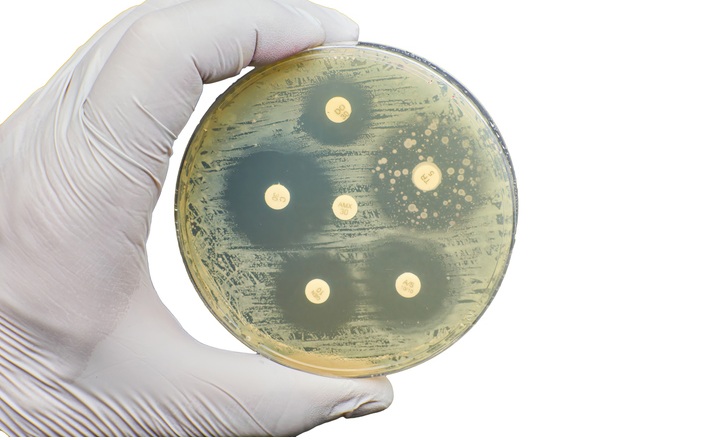
(Image Credit: iStock/ Nicolae Malancea)