





Why This Matters:
- Endotoxin or lipopolysaccharide (LPS) is a potent immunostimulatory and pyrogenic component of Gram-negative bacterial membranes. Trace amounts can trigger inflammatory processes.
- LPS contamination is ubiquitous. It can originate from water, buffers, raw materials, and processing equipment, making rigorous monitoring essential for injectables and implanted medical devices.
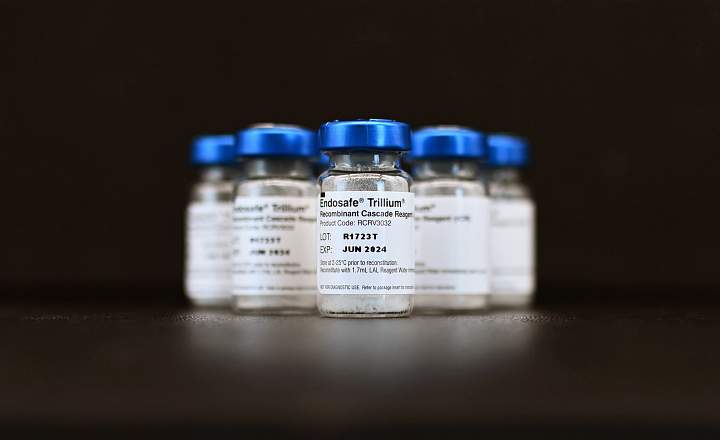
- Limulus Amebocyte Lysate (LAL) assay, the most widely used endotoxin detection method, is vulnerable to Low Endotoxin Recovery (LER) - a masking phenomenon in which spiked endotoxin becomes undetectable, giving falsely low or 'clean' results.
- Common formulation excipients - including surfactants, chelators, and certain salts - can mask endotoxin. This creates a regulatory and clinical risk if masking is not identified.
- Previously, it was hypothesized that masking of LPS was the result of inactivation, though it has since been shown that masked LPS remains biologically active. This paper helps to explain why.
Key Findings: Using a combination of dynamic light scattering and small-angle X-ray scattering, Gorman et al. show that LER-promoting excipients affect changes in LPS morphology and aggregate size, which likely explain their masking effects.1
- Formulations containing only surfactant (PS-20, PS-20, or Triton X-100) cause changes in LPS morphology and reduce aggregate size.
- Formulations containing only chelating agents (citrate, phosphate, or EDTA) do not cause changes on their own; however, when combined with surfactants, chelating agents promote changes in LPS morphology and reduced aggregate size.
- Magnesium (Mg²⁺) cations, which are known to stabilize LPS aggregate structures, blocked the effects of surfactants and chelating agent on LPS morphology and aggregate size.
Bigger Picture:
This study supports the hypothesis that LER is mechanistically linked to physicochemical changes in LPS aggregates rather than simple inactivation or degradation. Endotoxin testing must be validated within the actual product matrix, as formulation-specific excipients can profoundly influence detectability. When masking is suspected, pre-treatment or unmasking steps are essential to restore measurable LPS activity. This is particularly critical as masked endotoxin is biologically potent, meaning products can appear 'clean' analytically while still posing a risk to patients.
(Image Credit: iStock/Gorodenkoff)
References:
- Gorman et al. (2025). Investigating the Effects of Chelating Agents, Surfactants and Magnesium Cations on the Size of LPS Aggregates in Formulations Causing Low Endotoxin Recovery in Limulus Amebocyte Lysate Assays. European Journal of Pharmaceutics and Biopharmaceutics.