



Why This Matters:
- Necrotizing enterocolitis (NEC) remains a major cause of morbidity and mortality in preterm infants, particularly in very low birthweight (VLBW) populations.
- Probiotic administration - especially Bifidobacterium longum ssp. infantis strain EVC001 - has been widely adopted in NICUs, but regulatory and safety concerns have led some centers to discontinue routine use.
- These studies evaluate the effects of EVC001 administration in preterm infants, providing rare real-world data on NEC incidence before, during, and after cessation of B. infantis administration.
Key Findings: The two studies evaluated the impact of Bifidobacterium longum ssp. infantis strain EVC001 on necrotizing enterocolitis (NEC) in preterm infants. In the first study, EVC001 was administered enterally to infants ≤33 6/7 weeks gestation until 36 weeks postmenstrual age; 265 infants received EVC001 and 277 did not.¹ In the second study, a retrospective, non-concurrent cohort study, 733 very low birth weight (VLBW, <1500 g) infants, including a subgroup of extremely low birth weight (ELBW, < 1000 g) infants, were evaluated before, during, and after routine probiotic administration, which was discontinued following regulatory caution.² Findings from these two studies are as follows:
- Probiotic use was associated with reduced NEC ≥ stage 2 (p = 0.0058), decreased incidence of bloody stools (P < 0.0001), faster achievement of full enteral feeds (from 4.7 to 0.4% of days, P < 0.0001), and fewer total parenteral nutrition days (P < 0.0001).¹
- In VLBW infants, NEC incidence decreased from 7.7% in the untreated group to 0.9% in the probiotic group (P = 0.012).¹
- NEC incidence was lowest during EVC001 administration (2.6%) compared with pre-probiotic (12%) and post-probiotic cessation periods (16%).²
- NEC risk was significantly higher both pre-EVC001 (adjusted relative risk [aRR] 4.4, 95% CI 2.2–9.0) and post-EVC001 (aRR 4.5, 95% CI 2.0–9.9; P < 0.001) compared with the EVC001 period.²
- Severe NEC was less common in infants receiving EVC001 (VLBW OR 5.3, ELBW OR 5.0).²
- NEC-related mortality was lowest during EVC001 administration (0.9% vs 2.8% without EVC001).²
Bigger Picture: Necrotizing Enterocolitis (NEC) remains one of the most feared complications of prematurity, with mortality rates that can exceed 20–30% in severe cases and long-term morbidity among survivors. Historically, NEC prevention strategies have focused on:
- Human milk feeding
- Antibiotic stewardship
- Improved NICU hygiene
- Feeding protocols
Over the past decade, attention has shifted toward intentional microbiome modification, particularly through administration of targeted probiotics. This study contributes to a growing body of evidence suggesting that targeted microbiome support—particularly with human milk oligosaccharide (HMO)-adapted B. infantis strains—may substantially reduce NEC risk in vulnerable preterm infants.
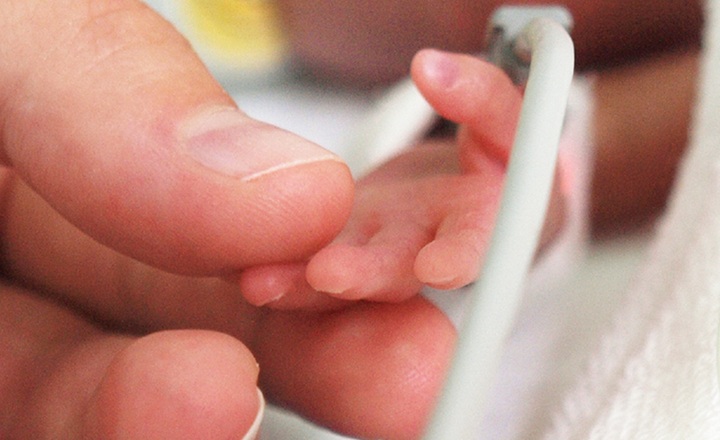
(Image Credit: iStock/IvanJekic)
References:
1. Sohn et al. 2024. Bifidobacterium longum subsp infantis (EVC001) is Associated with Reduced Incidence of Necrotizing Enterocolitis Stage ≥2 and Bloody Stools in Premature Babies. Journal of Perinatology.
2. Selesner et al., 2026. Increase in Necrotizing Enterocolitis with Cessation of Bifidobacterium longum ssp. infantis Administration in Very Low Birthweight Infants: A Single Center Retrospective Cohort Study. Journal of Pediatrics.