




Why This Matters:
- Clade 2.3.4.4b H5Nx viruses are a genetically related group of highly pathogenic avian influenza A (HPIA) viruses that dominate the current global avian influenza H5 outbreak, characterized by extensive genetic re-assortment, wide host range, and persistent zoonotic concern.
- FDA-cleared clinical respiratory panels detect influenza A virus but do not reliably subtype or exclude avian influenza H5, creating a critical surveillance blind spot.
- Avian influenza H5 infections in humans are rare events to date; traditional specimen-by-specimen testing strategies are inefficient and resource-intensive for surveillance.
- Pooling strategies combined with multiple sensitive molecular assays enable scalable detection or confident exclusion of rare pathogens while conserving reagents, labor, and laboratory capacity.
- Such approaches support public health surveillance as well as downstream infection control, occupational exposure management, and the dairy industry.
Key Findings: The authors developed and deployed a combined testing strategy using FDA-authorized clinical respiratory assays alongside pooled research-developed RT-PCR assays targeting influenza A and H5 across two seasonal surveillance periods: 2024 summer and 2025 winter.¹
Operational feasibility: Research-developed assays were successfully embedded into a high-throughput clinical laboratory without disrupting routine diagnostic workflows. Approximately 96 specimens could be processed with ~3 hours of hands-on time.
- Seasonally adaptive surveillance:
- During the summer (low influenza activity), SARS-CoV-2–negative respiratory specimens were pooled and screened for influenza A and influenza A subtype H5.
- During the winter (high influenza activity), influenza A–positive but unsubtyped specimens were pooled and screened specifically for influenza A subtype H5.
- Enhanced detection: Research screening identified additional influenza A–positive specimens that were not detected by routine clinical testing during the summer period, demonstrating increased sensitivity at low prevalence.
- No H5 detected: Across >8,700 respiratory specimens screened over both seasons, no H5-positive samples were identified.
- Pooling performance: The five-specimen pooling format showed minimal loss of analytical sensitivity and enabled efficient deconvolution of positive pools when needed.
- Assay validation: H5 assays were validated using plasmid controls, clinical specimens, and RNA extracted from H5N1-positive bovine milk, supporting analytical robustness.
- Cost efficiency: Reagent cost was approximately $15 per pool (~$3 per specimen), making the approach suitable for sustained surveillance.
Bigger Picture: Ongoing outbreaks of highly pathogenic avian influenza (HPAI) in poultry and other animal species have heightened concern about zoonotic transmission to humans, particularly among exposed occupational groups. However, the rarity of human infection presents a fundamental surveillance challenge: how to confidently exclude HPAI at scale without overwhelming laboratory resources. This study demonstrates that leveraging pooled testing and research-developed assays within a clinical framework can close diagnostic gaps that arise when emerging pathogens outpace the availability of regulatory assays.
Importantly, the study also shows that the absence of detection can be epidemiologically meaningful when supported by sensitive, systematic surveillance. From a public health risk-assessment perspective, these findings suggest that symptomatic human infection with H5 remained rare despite substantial regional animal disease burden.
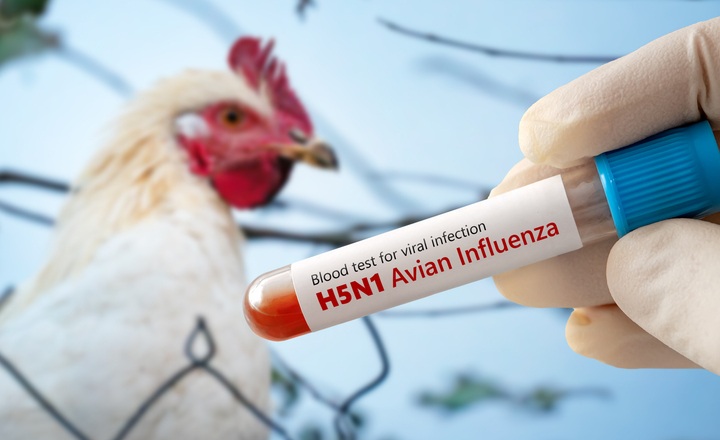
(Image Credit: iStock/Diy13)
References:
- Kanjilal et al. 2025. Development of a Combined Clinical and Research-Developed Testing Strategy for Highly Pathogenic Avian Influenza A Virus H5. Open Forum Infectious Diseases.