
Microbiology workflows rely on many simple repetitive tasks, most notably media preparation and dispensing. Performing these simple lab chores manually is time-consuming and carries a high risk of contamination, which can impact experimental results. In this interview, Gerald Posch, Product Manager at INTEGRA Biosciences, explains how automated media preparation workflows are helping labs to reduce errors, simplify processes and enable a shift to high-throughput work.
Q: What are the major bottlenecks in microbiology media preparation workflows?
Gerald: Two of the main bottlenecks are consistency and throughput, because many steps are still performed manually. Typically, glassware with media is autoclaved, and petri dishes or culture tubes are filled with sterile media by hand. This takes a significant amount of time and effort, and negatively affects both consistency and reproducibility, as well as posing a higher risk of contamination. New approaches to limit the amount of manual handling can significantly increase laboratory throughput and media reproducibility. At INTEGRA, we focus on producing compact automation solutions that integrate easily into existing workspaces, and can be scaled up as needs grow. This approach enables labs to save time and boost throughput without needing to invest in large, complex robotic systems.
Q: How can automation improve efficiency and consistency in media preparation and plate filling?
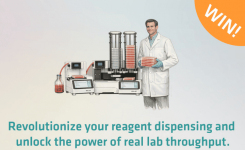
Gerald: Automation helps to improve efficiency by reducing the need for manual handling in multiple steps throughout the workflow. Automating pouring and plate filling minimizes human error and variability between technicians. This ensures reproducible dispensing – both in terms of quality and volume – across a large number of petri dishes or microplates. Automation also significantly increases throughput through continuous, hands-free operation, and improves the efficiency of the entire lab by allowing staff to redirect their focus towards other, higher value tasks. INTEGRA offers several solutions that provide these advantages, including the MEDIACLAVE 10/30 media sterilizer, MEDIAJET petri dish filler and WELLJET reagent dispenser.
Q: Can you explain how systems like MEDIACLAVE and MEDIAJET work together to streamline workflows?
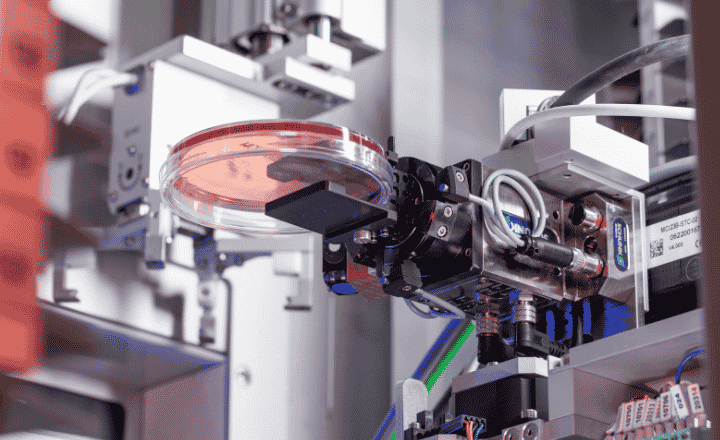
Gerald: INTEGRA aims to provide an integrated solution, creating a seamless workflow from preparation to plate filling. The MEDIACLAVE handles automated media preparation and sterilization. The instrument stirs agar media and precisely monitors its temperature, ensuring homogeneity while preventing excessive heat exposure to maintain performance. The MEDIAJET can then be connected directly to the MEDIACLAVE to create a closed system that maintains sterility during dispensing. The MEDIAJET automatically fills petri dishes without operator-dependent intervention, processing up to 1,100 dishes in an hour without risk of contamination.
Q: What are the key benefits of connecting media preparation and filling into a single automated process?
Gerald: There are several advantages, all related to the elimination of manual transfer steps between preparation and filling. Connecting the processes together enables a sterile, closed workflow to be maintained, which naturally reduces contamination risk. An automated process also offers improvements in speed and efficiency, requiring less staff oversight – particularly with INTEGRA’s walk-away solutions – meaning staff time can be spent on other lab tasks.
Q: Can labs use these systems independently, rather than in a combined workflow?
Gerald: Sure, both systems can also be used as standalone solutions. Most INTEGRA instruments are designed to be scalable, and teams need not invest in the entire ecosystem. For labs that want to improve efficiency of filling, MEDIAJET is often used without direct MEDIACLAVE connection, supporting workflows that involve sterile filling of petri dishes after traditional autoclaving. The inherent flexibility of INTEGRA’s instruments allows labs to adapt systems to their specific workflows and requirements.
Q: How can automation be applied to microplate formats?
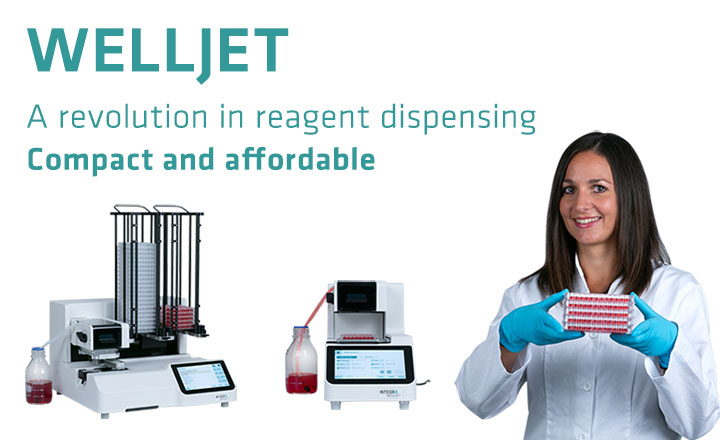
Gerald: Labs are increasingly interested in scaling down experiments from larger petri dish formats to microplates. Microplates offer several advantages, such as reduced reagent use and higher throughput, enabling more experiments to be run in parallel using a smaller footprint. Similar automation solutions can be applied to this format, including INTEGRA’s WELLJET for liquid dispensing. The WELLJET can be easily connected to the MEDIACLAVE via a recently launched adapter, significantly increasing microplate filling speed compared to manual approaches.
Q: What are the main challenges when dispensing agar into microplates, and how can labs overcome them?
Gerald: One of the main challenges when working with agar is that it may polymerize during processing, which can lead to clogging. Automation can help, as it’s obviously faster, but the smaller bore silicone tubing required for lower volume applications – such as when filling microplates – increases the risk of blockages. Fortunately, the WELLJET’s EasySnap™ dispensing cassette is available in an 8-channel, large bore format, which can be combined with higher agar temperatures to help avoid clogging and increase the consistency of dispensing.
Q: How important is temperature control when dispensing agar into microplates with the WELLJET, and what impact does it have on results?
Gerald: Balancing temperature control with dispense speed is critical to avoid clogging. Conveniently, one of the key benefits of the MEDIACLAVE is that it allows precise regulation of the dispense temperature. We’ve done extensive testing and found that the higher the media temperature for dispensing, the better the overall performance. The WELLJET can dispense at temperatures up to 80 °C, and working at these higher temperatures helps to limit clogging, leading to more consistent dispensing. Equally importantly, we found that dispensing at lower temperatures can lead to air bubble formation in the dispensed media, which has the potential to negatively affect results of downstream assays. However, it’s also essential to balance the improved dispensing performance provided by higher temperatures with potential degradation of media components that may be heat sensitive to ensure best results.
Q: For labs not ready for full automation, what intermediate solutions are available to improve reproducibility and efficiency?
Gerald: Labs not ready for full automation could take advantage of individual products: for example, use traditional autoclaves for media sterilization, and use the MEDIAJET or WELLJET for dispensing. INTEGRA’s tools are designed to scale with the lab’s needs, so there is no need to jump straight to complete automation. Other semi-automated solutions are also available, for example, sterilization of media with the MEDIACLAVE followed by manual dispensing with the DOSE IT laboratory peristaltic pump, which provides controlled, repeatable dispensing into bottles, flasks or culture tubes. Any use of automated solutions can help to reduce variability and increase productivity compared to fully manual processes.
Q: Beyond media preparation and dispensing, how can tools like repeat dispensing pipets improve microbiology workflows?
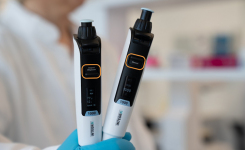
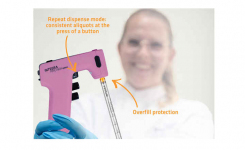
Gerald: Repeat dispensing pipets – like INTEGRA’s PIPETBOY GENIUS intelligent serological pipet controller and SWITCH hybrid pipette – enable rapid aliquoting of liquid broth or cultures across multiple vessels. Volumes greater than 1 ml can be easily dispensed with the PIPETBOY GENIUS, whereas the SWITCH is ideal for transferring sub-milliliter volumes. The repeat dispense function available on both devices allows the same volume to be dispensed over and over again, without requiring aspiration of more reagent every time. This is really useful in a microbiology lab, when you need to aliquot across multiple tubes or plates, or when you need to inoculate all your tubes or plates from a starter culture. Like all lab automation products, this helps to improve speed and consistency in routine workflows, as well as having ergonomic advantages for the scientist performing the work.
Discover INTEGRA's automated media preparation solutions
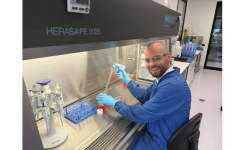
About Gerald Posch - Product Manager, INTEGRA Biosciences