





Why This Matters:
- More than 80 million endotoxin tests are performed annually, with the majority relying on traditional animal-derived Limulus Amebocyte Lysate (LAL) reagent.
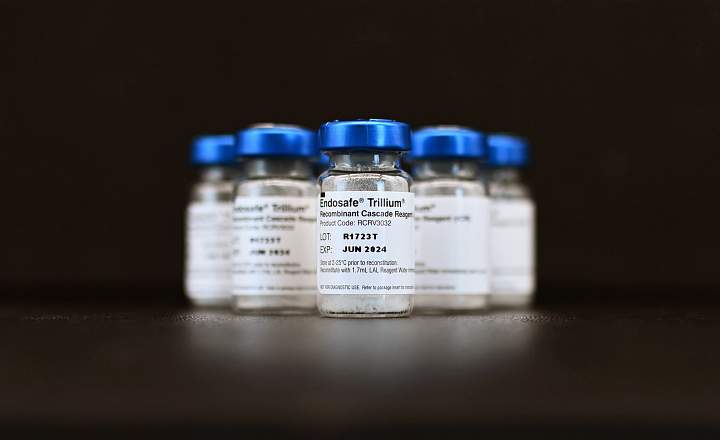
- This paper addresses the critical shift from traditional LAL-based assays to assays incorporating recombinant Factor C (rFC) and Cascade Reagents (rCR) — methods increasingly recognized by regulatory authorities (e.g., USP’s new Chapter <86> permitting recombinant reagents).
- As pharmaceutical manufacturing environments harbor unique microbial communities — including Gram-negative bacteria (Pseudomonas, Burkholderia), yeasts, and molds — validating recombinant reagents in-house against indigenous microorganisms is essential to ensure robust detection of endotoxin and avoid false negatives caused by microbial interference.
Key Findings:
Provenzano (2025) outlines a practical validation framework for recombinant endotoxin reagents, emphasizing testing with microbial isolates representative of the facility’s environment.1
• Recombinant reagents overview: recombinant factors offer sustainability and reduced batch variability compared to animal-derived LAL. rFC is a recombinant version of the natural endotoxin sensor protein (Factor C) that detect lipid A. It does not engage the full clotting cascade, and instead is used to generate fluorogenic stubstrate. In comparison, rCR reconstitutes the full enzymatic cascade (consists of Factors C, B, and proclotting enzyme), functioning much like traditional LAL-based assays. rCR uses the same reader as LAL-based assays and takes many readings over time to generate traditional kinetic chromogenic results.
• Interference potential: Non-LPS microbial components (e.g., β-glucans, peptidoglycans) and microbial enzyme activity may alter reagent performance or mask endotoxin, especially at high concentrations or in complex matrices, underscoring the need for challenge testing.
• Autogenous microbe selection: Validation should include autochthonous organisms from environmental monitoring programs, water systems, and production inputs — prioritizing those with histories of excursions — to mirror actual conditions that the assay will encounter.
• Spike recovery strategy: Endotoxin spike-recovery studies in the presence of indigenous microorganisms should demonstrate consistent recovery (e.g., 50 – 200 %), confirming that recombinant reagents reliably detect endotoxin even in complex microbial backgrounds.
• Matrix effects and stress states: Testing both stressed and non-stressed cells across concentration ranges and relevant product matrices ensures reagents maintain specificity and robustness under real-world process variations.
Bigger Picture:
The transition from LAL to recombinant endotoxin reagents represents a meaningful advance in sustainability, supply chain security, and reproducibility for pharmaceutical quality assurance. However, successful implementation demands more than manufacturer validation data — it requires validation against indigenous microorganisms that reflect the unique bioburden of each production environment. This proactive validation mitigates the risk of assay interference, strengthens regulatory defensibility, and enhances confidence in endotoxin testing outcomes. As regulatory frameworks evolve to include non-animal methods (e.g., USP Chapter <86> for recombinant reagents), facility-specific microorganism testing will become a cornerstone of robust endotoxin control strategies in biologics and sterile product manufacturing.
(Image Credit: iStock/ agungsusilo)
References:
- Provenzano. (2025). Validating Recombinant Endotoxin Reagents Why Indigenous Microorganism Testing Is Essential. PDA Letter.