




- Bloodstream infections are associated with high mortality/morbidity, requiring rapid targeted therapy to improve outcomes.
- Traditional workflows rely on culture-based identification and AST, which can delay targeted therapy by 24–72 hours.
- Rapid syndromic panels enable earlier pathogen ID and resistance detection directly from positive blood cultures, improving turn-around times.
- Accurate resistance gene detection is particularly important in settings with high prevalence of multidrug-resistant organisms.
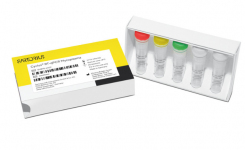
Key Findings: 144 residual positive blood culture samples from non-replicated patients were analyzed using the Molecular Mouse (MM) Sepsis panels (Alifax, Padova, Italy) for Gram-positive (GP) identification, Gram-negative (GN) identification, and resistance determinant detection across two hospital sites. Results were compared against a standard-of-care workflow that included subculture, MALDI-TOF MS, antimicrobial sensitivity testing (AST), and RT-PCR.¹ The authors reported:
- High overall identification agreement: The system achieved an overall 89% species-level agreement for GN organisms and 92% for GP organisms compared with standard-of-care workflows. Agreement improved (>98%) when genus-level identification was included.
- Excellent performance for antibiotic resistance determinants: Overall agreement for resistance gene detection was ~99% across GN and GP pathogens:
- For GN pathogens: High detection accuracy was reported for major Enterobacterales and non-fermenters, including: Escherichia coli, Klebsiella pneumoniae, Acinetobacter baumannii complex, and Pseudomonas aeruginosa.
- For GP pathogens: High agreement was observed for Staphylococcus aureus, Coagulase-negative staphylococci, Enterococcus faecalis and E. faecium. Some variability was observed in species-level discrimination for streptococci.
- Overall limitations:
- Reduced sensitivity was noted in polymicrobial bloodstream infections, particularly for species-level identification.
- Off-panel organisms were not consistently detected, reflecting inherent design limitations of targeted syndromic assays.
Bigger Picture: This study reflects the ongoing transition of blood culture diagnostics toward rapid molecular syndromic testing integrated with antimicrobial resistance profiling. While conventional workflows remain the diagnostic standard, they are increasingly challenged by the need for faster turnaround times in sepsis management, where every hour of delay in appropriate therapy increases mortality risk.
The data demonstrate that modern sepsis panels can deliver clinically actionable organism identification and resistance gene detection within ~1 hour, substantially reducing diagnostic lag compared with culture-based methods.
Importantly, the study also highlights persistent challenges in the field:
• Trade-off between breadth and sensitivity in multiplex panels
• Reduced performance in polymicrobial infections
• Dependence on predefined resistance gene targets, limiting detection of novel or rare mechanisms
Overall, these findings support a hybrid diagnostic model in which rapid molecular panels provide early guidance, followed by culture and phenotypic AST for confirmation and full susceptibility profiling.
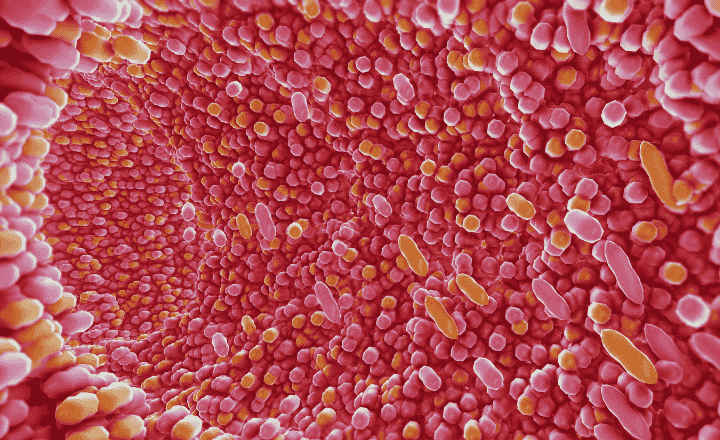
(Image Credit: iStock/Scharvik)