




Why This Matters:
- Antimicrobial susceptibility testing (AST) is essential for guiding appropriate antimicrobial therapy and supporting efforts to combat antimicrobial resistance (AMR).
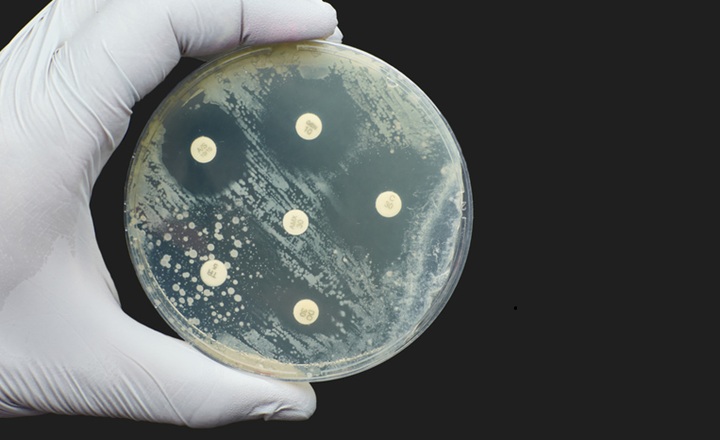
- Traditional disk diffusion AST relies on trained personnel to manually measure inhibition zones, making the process labor-intensive and susceptible to inter-operator variability.
- Clinical microbiology laboratories are facing increasing testing volumes and workforce shortages, driving research into artificial intelligence (AI)–based approaches to improve efficiency, consistency, and throughput.
- Automated image-based AST analysis has the potential to standardize result interpretation, reduce manual workload, and accelerate reporting.
Key Findings: Researchers developed an image-based dual-stage diagnostic framework that integrates a YOLO object-detection model with a convolutional neural network (CNN) to perform bacterial identification and antimicrobial susceptibility classification directly from Petri dish images.1 The framework was trained and validated using 207 digital images containing antibiotic inhibition zones. Unlike conventional AST interpretation, the system mimics CLSI susceptibility categorization using visual inference alone, eliminating the need for manual measurements, disk labels, or interpretive tables.
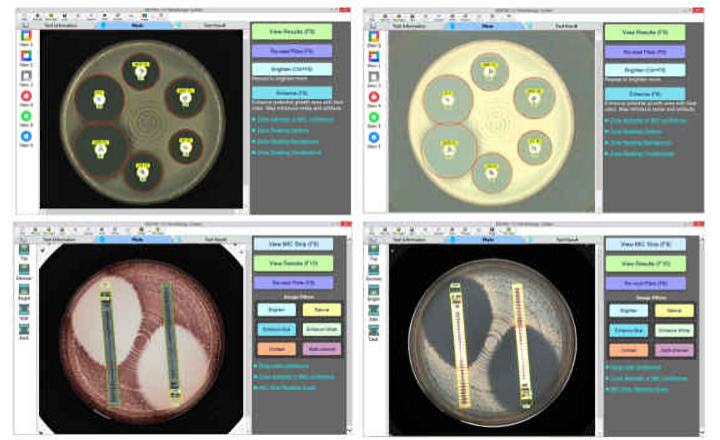
Automated AST successfully identified antibiotic disks, inhibition zones, and handwritten bacterial species annotations directly from agar plate images.
- Localized textual annotations with a mean Average Precision (mAP) exceeding 0.93.
- Achieved a balanced classification accuracy of 94.7%.
- Correctly classified all 22 susceptible samples (100% sensitivity for susceptibility) and 17 of 19 resistant samples (89.5% specificity).
- Demonstrated a Very Major Error (VME) rate of 0%, indicating no false-susceptible classifications, and a Major Error (ME) rate of 10.5%, reflecting a conservative tendency to classify isolates as resistant.
Deep Learning Performance
- Accurately detected subtle inhibition zone boundaries that can be challenging to interpret manually.
- Maintained robust performance across varying image conditions and plate characteristics.
- Generated susceptibility classifications without manual zone measurements or operator-dependent interpretation.
Bigger Picture: This study reflects a broader shift toward AI-enabled clinical microbiology, where machine learning systems augment rather than replace laboratory professionals. While genomics and molecular diagnostics have received much of the recent attention in microbiology AI, routine laboratory workflows such as AST interpretation represent some of the most immediately deployable opportunities for automation. As clinical laboratories face increasing testing volumes and workforce shortages, AI-assisted susceptibility testing may improve efficiency, consistency, and turnaround times. At the same time, antimicrobial resistance (AMR) continues to expand globally, and more rapid, standardized susceptibility reporting could strengthen antimicrobial stewardship efforts by supporting earlier and more appropriate antimicrobial selection. Successful implementation will require ongoing validation and performance monitoring to ensure reliability across evolving laboratory practices, imaging systems, and testing protocols.
(Image Credit: iStock/ Nicolae Malancea)